
Look for songs
Top Songs at Apple Music
Streaming Radio



New stories
Active forum topics
Subject: Folk Mass Revolution
Happy The Man – A Sebastian Temple classic reimagined by Wayne Bethanis
August 27, 2026 - 1:33am — Richard Schletty"Happy The Man" is a song by Sebastian Temple that was published in 1967, shortly after the Second Vatican Council (1962-1965). It appeared at the onset of the Catholic Folk Mass revolution. Temple was one of the lead composers of the acoustic guitar-driven component of early contemporary Catholic music.
The sheet music for Temple's "Happy The Man" album of 13 songs can be previewed and purchased at GIA Music: giamusic.com/resource/happy-the-man-print-g1788. Also included in this album is "Prayer of St. Francis".
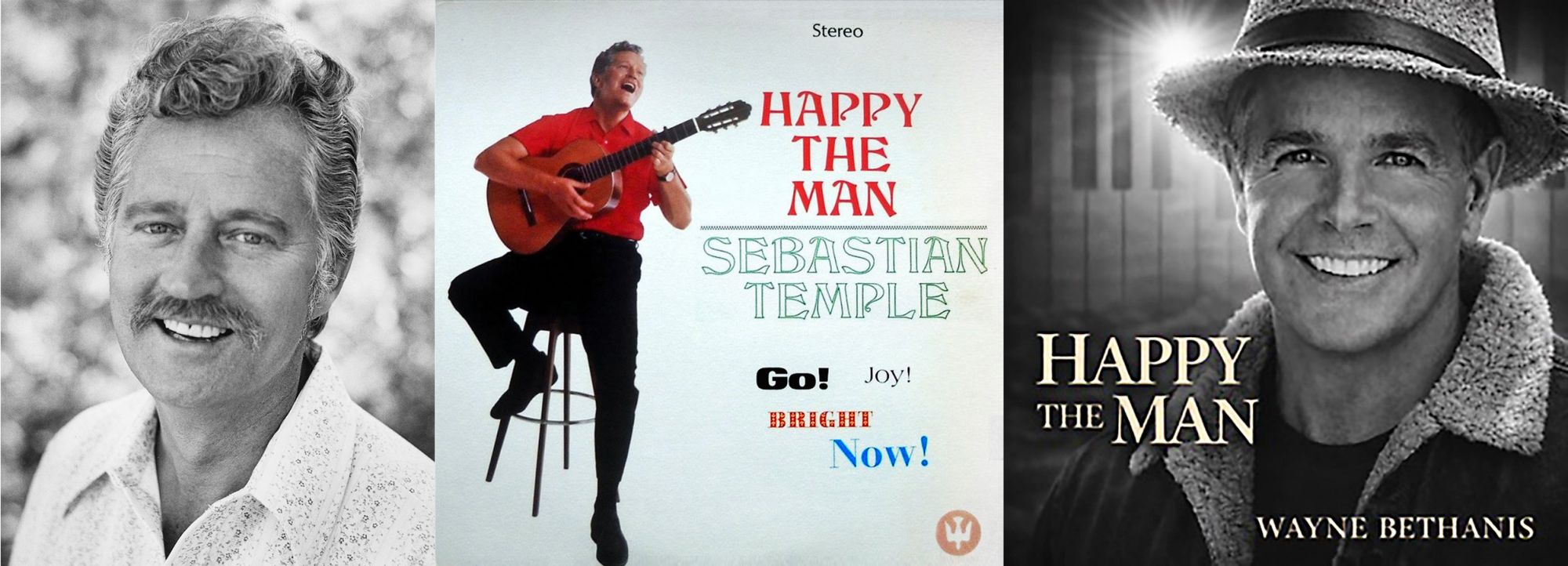
The original Temple song "Happy The Man" has been reimagined by Wayne Bethanis as a beautiful and dynamic New Age-styled instrumental piano composition with light orchestration. You can listen to it by clicking on the "Listen on All Platforms" link on this page: www.waynebethanis.com/happy-the-man-single
I extend my congratulations to Wayne Bethanis for having achieved an historic #1 rating on a mainstream music chart. Wayne writes in his blog post:
This is one of the most meaningful moments in my career! My cinematic re-imagining of HAPPY THE MAN has debuted at #1 on the New Age Notes Radio Chart - a milestone that carries a remarkable piece of music history with it. The song was written by the great Sebastian Temple as part of the Catholic Folk Revival of the 60's, which inspired millions of people around the world for decades, but this song, and his work, has never appeared on a mainstream international music chart!
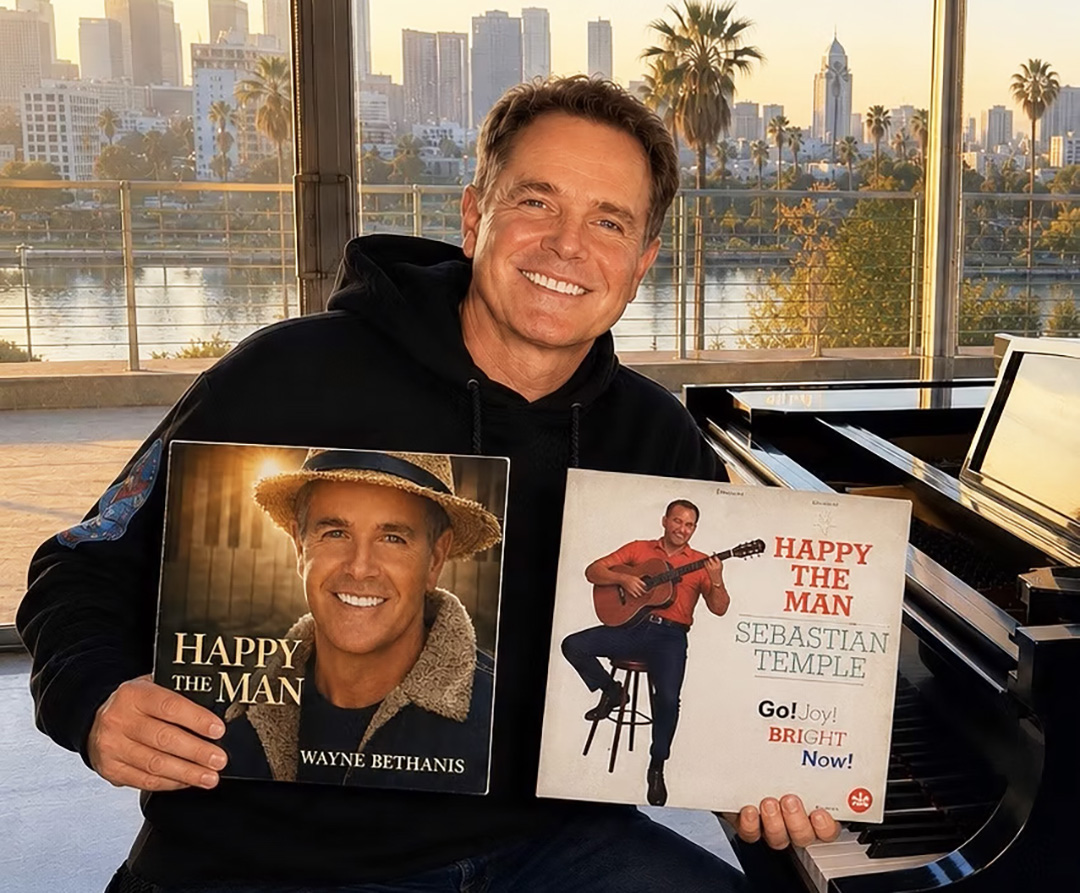
Here is an excerpt from Wayne's song release page:
With its warm tone, emotional depth, and strong dynamic arc, “Happy the Man” is positioned for playlists spanning Christian instrumental, peaceful piano, meditation and reflective listening. Beyond its musical impact, the song carries personal significance for Bethanis, who first heard it as a child singing in church — an experience tied to early spiritual formation and a lifelong connection to faith and music. That authenticity resonates throughout the performance, giving the track a sense of sincerity and emotional truth that stands out in today’s streaming landscape.
I have been a cantor since 1968 but I have to admit that I have never sung "Happy The Man". I checked many of my old Folk Mass hymnals and could not find it. Yet the melody is hauntingly familiar to me, as if it somehow crept into my musical DNA without me being aware. I did find an online source that lists some of its hymnal appearances:
- 20th Century Folk Hymnal, volume 1, 1974
- Let's Just Praise the Lord, 1978
- Hymns Old and New for the Irish Church
- McCrimmon's Celebration Hymnal for Everyone - 1994 edition (not in the 2012)
- Canadian Catholic Book of Worship II, 1980
The melody is beautiful. Written in the key of C, a voice does not have to ascend beyond high C, making it quite accessible to alto and baritone tessituras. Bars 5 and 6 of the song have a soaring ascent from middle C to high C. Wayne makes this interval sound delicate yet powerful, one of the defining moments of the song. Wayne's studio recording is introspective and expressive at the same time, with graceful arcs, tempo changes and harmonics that caress the soul of the listener.
For more information about the Folk Mass Revolution, see this article: topcatholicsongs.com/folk-mass-revolution. "Keep the Fire Burning" is a book and a podcast that traces the history of the Folk Mass. It mentions Sebastian Temple and his most famous song – "Prayer of St. Francis" – which is ubiquitous in Christian hymnals even to this day.
Here are some of the verses of "Happy the Man" for reference:
Happy the man who wanders with the Lord.
Happy the man who knows how to live,
Happy the man who never seeks reward…
 Facebook
 Twitter
Catholic Music Genres
November 17, 2025 - 4:28pm — Richard SchlettyThere are many categories and styles of Catholic music. Here is a list which is being fine-tuned as we go along. Some summaries are drawn from Google AI Overviews.
1) Gregorian chant: Church music sung as a monophonic (single vocal line) in free rhythm and a restricted scale (plainsong), in a style developed for the medieval Latin liturgy. Gregorian chant developed mainly in western and central Europe during the 9th and 10th centuries, with later additions and redactions.
2) Medieval, Renaissance and Baroque sacred music: Medieval sacred music, like Gregorian chant, was primarily monophonic and unaccompanied. The Renaissance saw the rise of complex polyphony, with more voices, larger choirs, and new forms like the mass and motet, often supported by the church and the printing press. The Baroque era introduced...
The Folk Mass Revolution
November 16, 2025 - 4:08pm — Richard SchlettyKeep the Fire Burning is the forgotten and untold story of the Folk Mass. The influence of this movement is still felt today in the Catholic liturgical industry and in contemporary Christian music.
Keep the Fire Burning – the book (available from OCP)
ocp.org/en-us/collections/dg/626/keep-the-fire-burning
This fascinating book examines the place of the Folk Mass in Church history. Was it a well-intentioned but failed attempt at updating worship? Or was it a genuine movement of the people?
Hear, O Lord (Ray Repp)
July 30, 2025 - 5:03pm — Richard Schletty
Hear, O Lord was composed and recorded by Ray Repp (the father of the Folk Mass revolution with his “Mass for Young Americans”). Here is his original recording. https://www.youtube.com/watch?v=OzBvsbRw1ak
Hear, O Lord by Ray Repp
From the album The Best of Ray Repp, Vol.1
Released on: 1966-01-01
℗ 1966 1967 1968 2004 OCP, 5536 NE Hassalo, Portland, OR 97213. All rights reserved. Made in USA. All selections BMI.
More songs by Ray Repp (playlist)
Article about the death and legacy of Ray Repp: https://cruxnow.com/church-in-the-usa/2020/04/ray-repp-dies-wrote-allelu-hear-o-lord-i-am-the-resurrection
Download a PDF capture of above article
Learn more about the Folk Mass revolution (mid 1960s and onward) by listening to this excellent podcast which features Ken Canedo who wrote the book "Keep the Fire Burning."
